
|
October 16, 2008 This month's feature: The Food of Gascony Bonjour et bienvenue to the third issue of La Marmite. Hopefully I'm starting to get the hang of this newsletter thing but as always I'd love to hear from you. Feel free to Contact Me with any questions or suggestions. Merci! In this issue, you'll find featured:
The Gascony Region
During the Middle Ages, Gascony was a principality that occupied the south west corner of France. In modern times there is no official demarcation, but the south west region of France, which includes the city of Bordeaux, is still popularly called Gascony. The area is rich with colorful history and characters from the past including the famous soldier d'Artagnan who lived in the 17th century and later served as a character in Alexander Dumas' novels, including the Three Musketeers. Gascony is a bucolic region, an area of rolling hillsides for the most part, and the local economy is principally orientated towards agriculture and tourism. An excellent combination for anyone interested in good eating. (Map provided by Wikipedia.)
Here are nine specialities of Gascony that everyone should enjoy at least once. Each, like most French food, receives lavish attention in its fabrication and each has a starring role in the fascinating history of French cuisine. As always, I encourage you to learn about your food, it can only increase your enjoyment.
Garbure Recipe
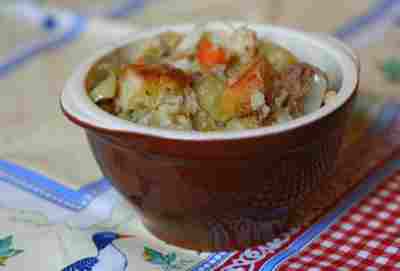
You can cook up a taste of Gascony tonight, with this delicious cabbage soup. This varied vegetable and meat stew is called simply Garbure in France. It should feature whatever fall vegetables you can find that look fresh and lovely. You'll find Garbure made with different cuts of pork as well and you could easily leave out the duck confit and still have a a very hearty stew, good for fattening up any vegetarians in the house. Please note that I used canned beans for this recipe, but the more traditional method would be to start with uncooked beans and add them at the start of cooking. Either way works fine.
Heat the olive oil in a large soup pot on medium heat and add the turnips, leeks, carrots, onions, and garlic. Cook, stirring occasionally for 10 minutes or until the vegetables have started to soften. Add the bouquet garni and about 4 cups of water. Season as you wish with pepper. The vegetables should be just covered with water and you may have to add some more as they cook. Put the heat on low and allow the soup to simmer uncovered for 90 minutes. Meanwhile, prepare the duck if you are using it. Open the can and remove the pieces of duck (do this carefully or you'll soon end up with duck fat everywhere). Remove the obvious fat from the duck and take the meat off of the bones. You should end up with about 3 cups of duck meat. (You can save the duck fat for cooking something else if you wish.) Add the duck meat, the beans, the chopped cabbage and the potatoes to the soup pot. Simmer for another 90 minutes, adding a minimal amount of water to keep things from sticking to the bottom of the pot. When you are ready to serve, pour the soup into a large oven proof baking dish. (Alternatively you could use individual onion soup bowls.) Cover with French bread cubes and push these down into the soup somewhat. Top with shredded cheese and bake in 350 degrees F oven for 20 minutes or until golden on top. Makes 6 generous servings.
Touissant - November 1st
Toussaint literally means all saints, and was originally a day the Catholic church created to commemorate all the saints. Over time this practice has become confounded with the Fete de Morts (or Day of the Dead) which was celebrated on November 2nd, the day after Toussaint. The scene below depicts Toussaint day at about the turn of the 20th century and was painted by the French painter Emile Friant.
In modern France, the celebration of Toussaint on November 1st has evolved to become a day of remembrance of those dear who have passed on. During the last few days in October you will find chrysanthemums for sale everywhere and these are bought in huge bunches to decorate graves. Toussaint is an official holiday in France and families gather in remembrance of those parted. After a trip to the cemetery a big meal will be served, and what is eaten varies considerably from region to region and family to family.
Next Issue Thanks so much for spending some time with me. In the next issue, due out on November 18th you can learn about how the French traditionally celebrate Christmas, just in time to add a French touch to your holiday festivities. If you'd like to let your friends know about La Marmite, forward this newsletter to them. And feel free to Contact Me with feedback. Your input is valued! If you're receiving this newsletter because a friend forwarded it to you, you can sign up for your own copy of La Marmite: Subscribe to La Marmite. A bientot and remember to enjoy your food! Your friend in France, Kim New! CommentsHave your say about what you just read! Leave me a comment in the box below. |